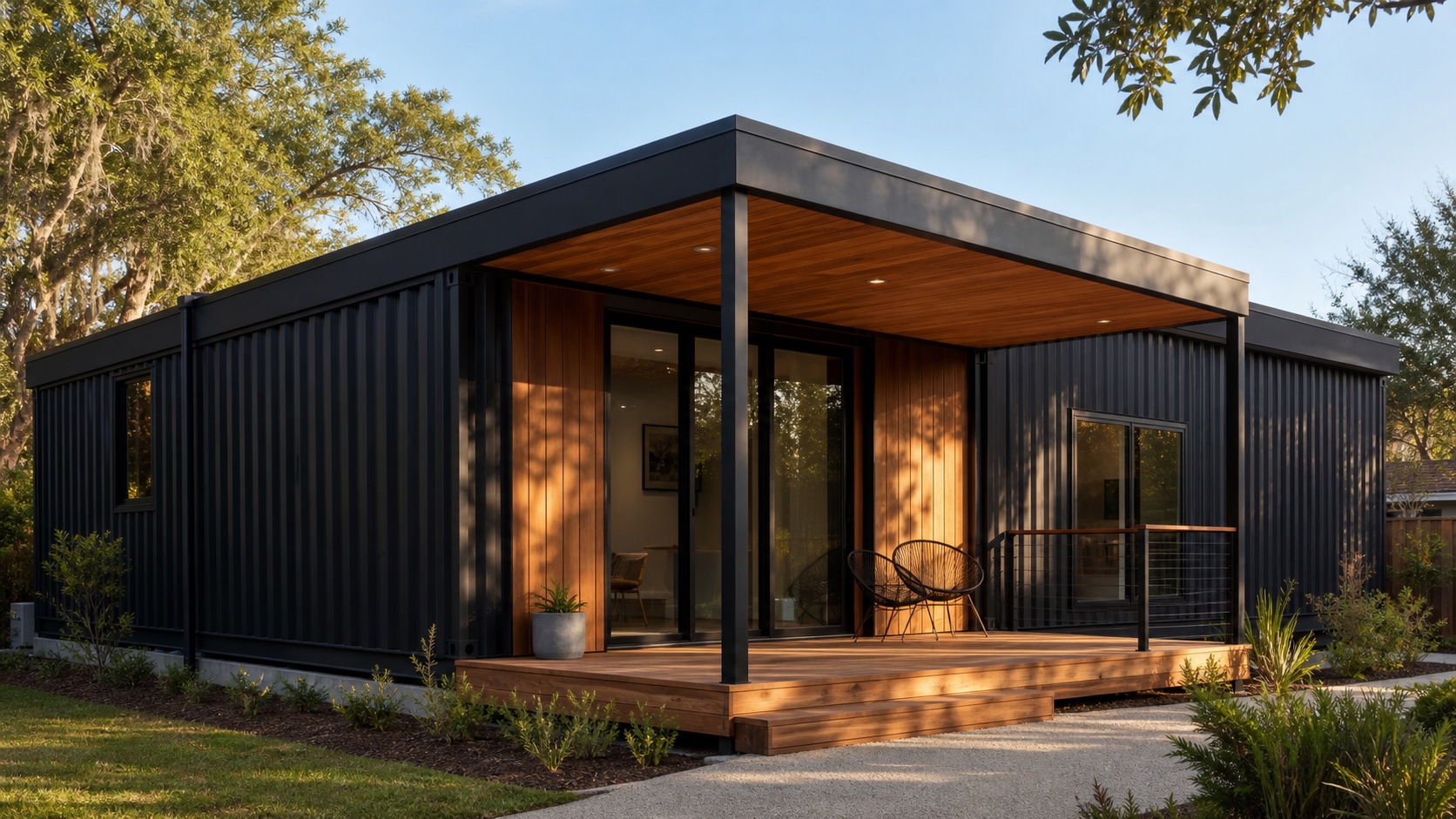
Buyers and investors are looking beyond square footage. Construction timelines, cost planning, maintenance, design flexibility, and long-term use all matter when choosing a path to a finished home or investment property.
Traditional construction remains the right fit for many projects. Engineered container construction is another option worth evaluating when a buyer wants a modern, efficient approach. The best choice depends on the land, local requirements, budget, timeline, and intended use.
Construction timeline
Traditional builds can involve several phases, separate trades, weather exposure, material availability, and inspection schedules. Each project is different, but those variables can affect the path from planning to completion.
With engineered container construction, portions of the work can be planned and prepared before the home reaches the site. That can help streamline installation for a properly designed and permitted project. It does not eliminate site work, engineering, approvals, or the need to coordinate with local requirements.
Cost predictability
Traditional construction budgets can shift when material prices, labor needs, or change orders change. A well-scoped modular project can offer more clarity earlier because much of the design and engineering work is decided before construction moves forward.
That does not mean every container home is less expensive. Site preparation, utilities, finishes, transport, engineering, and local requirements all affect the total. Buyers should compare complete project scopes, not only a starting price.
Structural strength and Florida conditions
Shipping containers are built from high-strength steel. When they are properly engineered, modified, insulated, and installed to applicable codes, they can form a durable structural foundation.
Florida projects need to account for moisture, heat, rain, wind exposure, drainage, roofing, windows, HVAC, and local building requirements. Every site and jurisdiction is different. A serious plan starts with the property and the standards that apply to it.
Modern design without a fixed look
Container homes are not limited to an industrial box. A thoughtful design can include open layouts, large glass openings, high-end kitchens and bathrooms, covered outdoor living, home offices, multiple-container configurations, and durable exterior finishes.
The question is not whether a home uses containers. It is whether the plan fits how the owner intends to live, host, work, or rent.
Investment use cases
For the right property and local rules, buyers consider container homes for primary residences, guest homes, vacation rentals, ADUs, workforce housing, or rental communities. An investment decision should account for zoning, permitting, financing, operations, insurance, tenant or guest demand, and the actual timeline to a finished asset.
Shorter construction stages can be meaningful to an investor, but returns are never automatic. The project needs a realistic budget, a clear use case, and a construction plan that matches the site.
Which path is right for you?
Traditional construction continues to be a strong choice for many highly customized homes. Engineered modular container construction may be compelling when the priorities are design efficiency, a clear plan, modern architecture, and a flexible approach to the build.
If you are evaluating land, a future home, or an investment use case, start a conversation with TSUR Homes. We can help you think through the practical questions before a project takes shape.